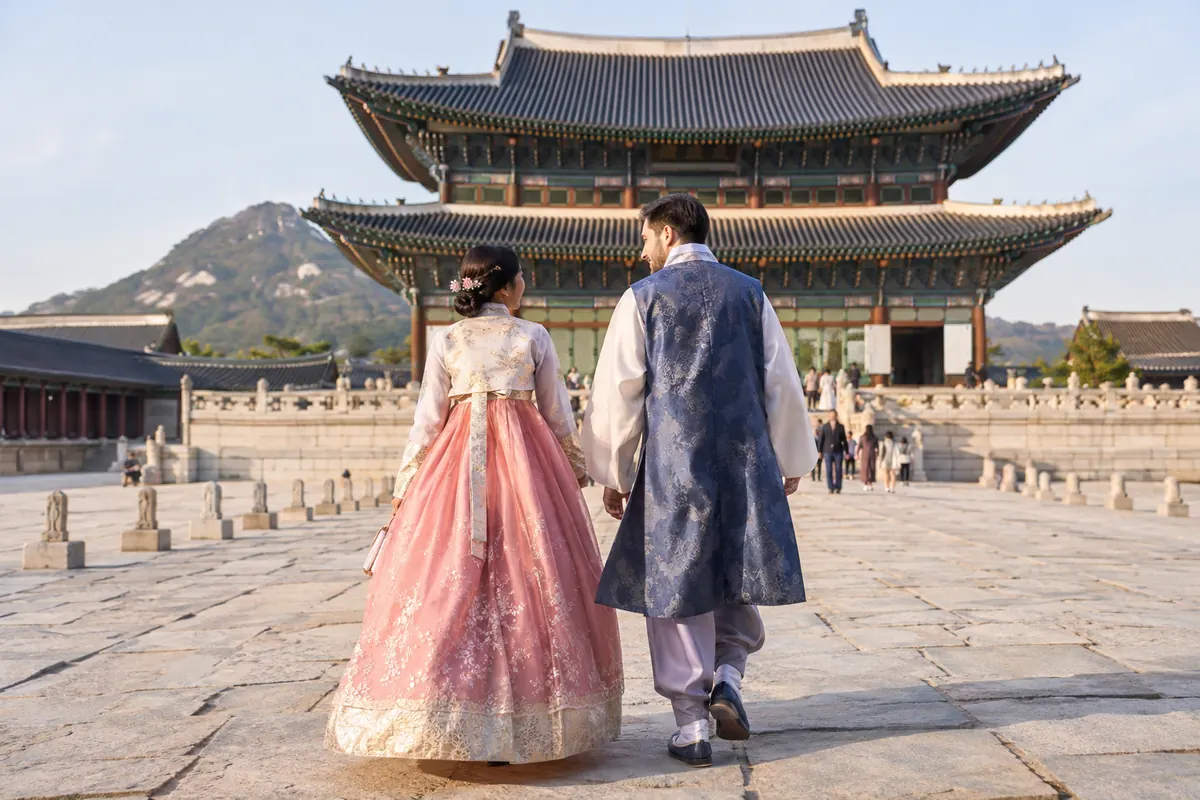
You can find a low headline price for a hanbok, walk into the shop and still lose half of your palace time choosing clothes, waiting for hair styling and learning that the return deadline is earlier than expected. A Gyeongbokgung hanbok rental is easy to arrange, but the cheapest listing is not always the simplest visit.
This guide explains the decisions that matter before you dress: what the rental clock includes, which extras cost more, when a deposit may be requested, what qualifies for free palace admission and how to avoid confusing two very different national museums.
Information checked on September 17, 2026. Rental prices and shop conditions change frequently. Confirm the complete package and return time directly with the shop before paying.
Quick answer: is a Gyeongbokgung hanbok rental worth it?
Renting hanbok is worthwhile if you want the clothing experience and enough time to walk beyond the main gate. It is not a money-saving trick. Regular adult admission to Gyeongbokgung is only KRW 3,000, while the rental costs much more. The value comes from wearing the clothing, taking photographs and seeing the palace at a slower pace.
For most first-time visitors, a four-hour package is more comfortable than a two-hour one. Changing, fitting, hair styling, walking to the entrance and returning to the shop all use time. A two-hour rental can work for a quick photograph near Gwanghwamun, but it leaves little room for the northern garden or an unhurried museum stop.
| Rental length | Best for | Main risk |
|---|---|---|
| About 2 hours | One palace loop and a few planned photographs | Fitting and queues consume too much of the booking |
| About 4 hours | First visit, main halls, Gyeonghoeru and time for breaks | You still need a firm turnaround time |
| All day | Palace plus Seochon, Bukchon or a professional photo session | Weather and walking comfort become more important |
1. Compare the complete package, not the window price
Gyeongbokgung Station exits 3 and 4 lead to an area with many rental shops. A sign outside may advertise the least expensive basic outfit. That price may not include the style displayed in the front window, premium embroidery, a petticoat, a handbag, a hat, elaborate hair styling or a longer rental period.
Before choosing clothes, ask the shop to show the total price for the package you actually want. Confirm these points:
- traditional or themed hanbok category;
- rental duration and exact return deadline;
- basic hair styling and the price of upgraded accessories;
- handbag, locker, hat and winter layer;
- late-return charge and how it is calculated;
- deposit, identification or card-hold policy;
- refund or change policy if the palace closes or heavy rain begins.
Official tourism material gives only a broad example range because each store sets its own conditions. Treat an online marketplace voucher as a starting point, not proof that every visible garment and accessory is included.
2. Ask when the rental clock starts
One shop may start the Gyeongbokgung hanbok rental period when you pay. Another may start it after you finish dressing. That difference matters on a busy morning when several groups are waiting for fitting rooms and hair styling.
Ask the staff to write or point to the return time before you leave. Take a photograph of the receipt and set two alarms: one for the time to start walking back and another for the final deadline. Include at least 20 to 30 minutes for the walk, changing clothes and a crowded elevator or fitting area. A beautiful spot at Hyangwonjeong is not worth a late fee.
3. Decide what identification or deposit you are willing to leave
Travelers report different experiences with deposits. Some shops request no security deposit; others may ask for an identification document, cash or another form of security, particularly for premium clothing. This is a shop policy, not a palace rule.
Do not assume you must surrender your only passport. Ask before paying whether the shop accepts a photocopy, hotel key card, cash deposit or another document. If you are uncomfortable with the condition, choose a different shop. There are many businesses in the area, and a low price is not a good reason to leave a document without understanding how it will be stored and returned.
4. Wear a complete outfit for free palace admission
Foreign and Korean visitors wearing qualifying hanbok receive free daytime admission to Gyeongbokgung. The official rule includes both traditional and everyday-style hanbok, but it requires a proper top and lower garment. In practical terms, wear a jeogori with a skirt or hanbok-style trousers.
A long outer robe by itself is not enough. A one-piece dress without a qualifying jeogori may also be rejected. The free-admission decision belongs to palace staff, not the rental shop or an online seller. If a costume looks heavily modified, ask the shop whether it follows the current Korea Heritage Service guideline.
Free admission does not mean you can skip every line. Follow the entrance signs and obtain any free-admission ticket or entry confirmation requested on the day. Special programs and nighttime openings can have separate reservation rules.
5. Check the palace calendar before booking the shop
Gyeongbokgung normally closes on Tuesdays. Seasonal closing times also change: the palace stays open later in summer than in winter, and final admission is earlier than the published closing time. When a regular closure falls on a public or substitute holiday, the replacement closure can move to another weekday.
Check the official calendar for your exact date before buying a non-refundable rental. Night viewing is a separate event with limited dates and ticket rules; a daytime hanbok reservation does not automatically secure nighttime entry. If you want an evening session, confirm both the palace ticket and a shop that accepts returns after the event.
For ordinary daytime visits, arriving near opening gives you more clothing choice and quieter photographs. Midday is easier in cold weather but usually brings larger tour groups. Our Korea weather and packing guide can help you choose a practical layer for the season.
6. Choose shoes and layers for stone paths, not only photographs
The palace is larger than it appears from Gwanghwamun. You will walk over stone, compacted ground and uneven thresholds. Decorative rental shoes may look better in a photograph but can be uncomfortable and slippery. Ask whether you may keep your own supportive shoes; many visitors do.
In summer, choose lighter fabric, carry water and schedule indoor breaks. In winter, ask whether the skirt or robe can fit over thermal clothing. Avoid trailing hems on wet ground. If rain becomes heavy, a shorter route and an indoor museum are safer than trying to protect a long skirt with one hand while holding an umbrella with the other.
Use the shop locker only for items allowed under its rules. Keep your phone, payment card, medicines and any essential travel document with you. For practical restroom planning during a long photo session, see our public toilets in Korea guide.
7. Use a route that matches your return deadline
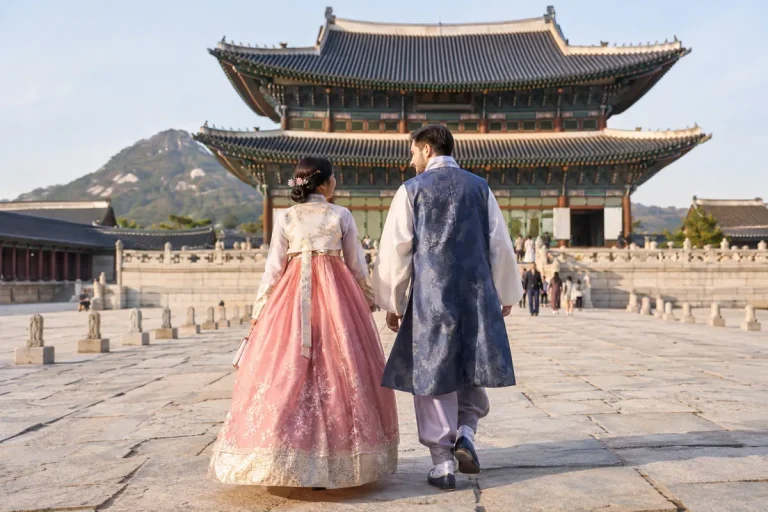
A simple Gyeongbokgung hanbok rental route begins at a shop near Gyeongbokgung Station, continues to Gwanghwamun and Heungnyemun, then reaches Geunjeongjeon. From there, decide whether time allows Gyeonghoeru Pavilion and the northern garden around Hyangwonjeong.
- Choose and fit the hanbok near the station.
- Walk to Gwanghwamun and complete entry.
- Photograph the broad courtyard before the largest groups arrive.
- Visit Geunjeongjeon and the nearby royal living quarters.
- Add Gyeonghoeru if you have at least an hour remaining.
- Turn back before your alarm, rather than when the rental time is almost over.
Do not build the route around one viral photograph. Areas can close temporarily for maintenance, ceremonies or weather. Courteous visitors do not block doors, climb foundations or occupy a narrow path for a long photo shoot.
8. Treat hair styling and photography as optional services
Basic braiding may be included, while elaborate styles, decorative pieces and professional photography cost extra. Show the staff the level you want before they begin. If you have textured, very short or delicate hair, ask what the shop can realistically provide rather than assuming that the display image is included.
A tripod, drone or commercial photo setup may be restricted even when casual photography is allowed. Keep walkways clear and ask before photographing another visitor closely. The palace is an active cultural heritage site, not a private studio.
If photographs are your priority, soft morning light and smaller crowds are often more useful than an expensive costume upgrade. A photographer should state the meeting point, delivery method, editing scope, cancellation policy and whether palace admission is included.
9. Do not confuse the two national museums
The National Palace Museum of Korea is beside Gyeongbokgung and focuses on the royal culture of the Joseon Dynasty and Korean Empire. It fits naturally before or after a palace visit, particularly when the weather turns bad.
The National Museum of Korea is the much larger history and art museum in Yongsan. It is not inside the Gyeongbokgung complex. Trying to add it to a short hanbok rental creates unnecessary travel and the risk of a late return.
If the National Museum of Korea is a priority, return the hanbok first and visit Yongsan later in ordinary clothes, or give the museum its own half-day. For a broader Seoul base decision, our where to stay in Seoul guide explains the differences between major areas.
A realistic four-hour Gyeongbokgung hanbok rental plan
- 00:00–00:45: selection, fitting, basic hair and payment;
- 00:45–01:05: walk to the gate and complete admission;
- 01:05–02:35: main courtyard, Geunjeongjeon, living quarters and Gyeonghoeru;
- 02:35–03:05: final photographs and begin returning;
- 03:05–03:35: walk back, change and check returned accessories;
- 03:35–04:00: buffer for crowds, a misplaced item or slow service.
This plan deliberately leaves a buffer. If the shop confirms that preparation time is excluded, you can use the extra time for the northern garden. If the rental begins at payment, keep the shorter route.
Final checklist before you pay
- Palace is open on the date and during the full rental period
- Complete outfit qualifies under the current hanbok guideline
- Total price includes the garment and accessories you selected
- Rental start time and exact return deadline are written down
- Late fee, damage policy and deposit method are understood
- Locker rules and prohibited valuables are clear
- Shoes and layers are comfortable for the forecast
- Return alarm and walking buffer are set
- National Palace Museum and National Museum of Korea are not confused
A good Gyeongbokgung hanbok rental does not require the most expensive dress or a complicated reservation. It requires a complete outfit, a clear return time, comfortable walking choices and a route that leaves enough time to notice the palace itself.
Sources and research note
- Korea Heritage Service: official hanbok free-admission guideline
- Korea Heritage Service: palace hours and regular closure information
- Korea Heritage Service: Gyeongbokgung admission fees
- VISITKOREA: hanbok rental process and planning overview
- National Palace Museum of Korea
Official sources support the palace admission, clothing, schedule, museum and fee information. Recent traveler discussions were reviewed to identify recurring questions about deposits, preparation time, shop crowds and package inclusions; those reports are not presented as universal shop policies.