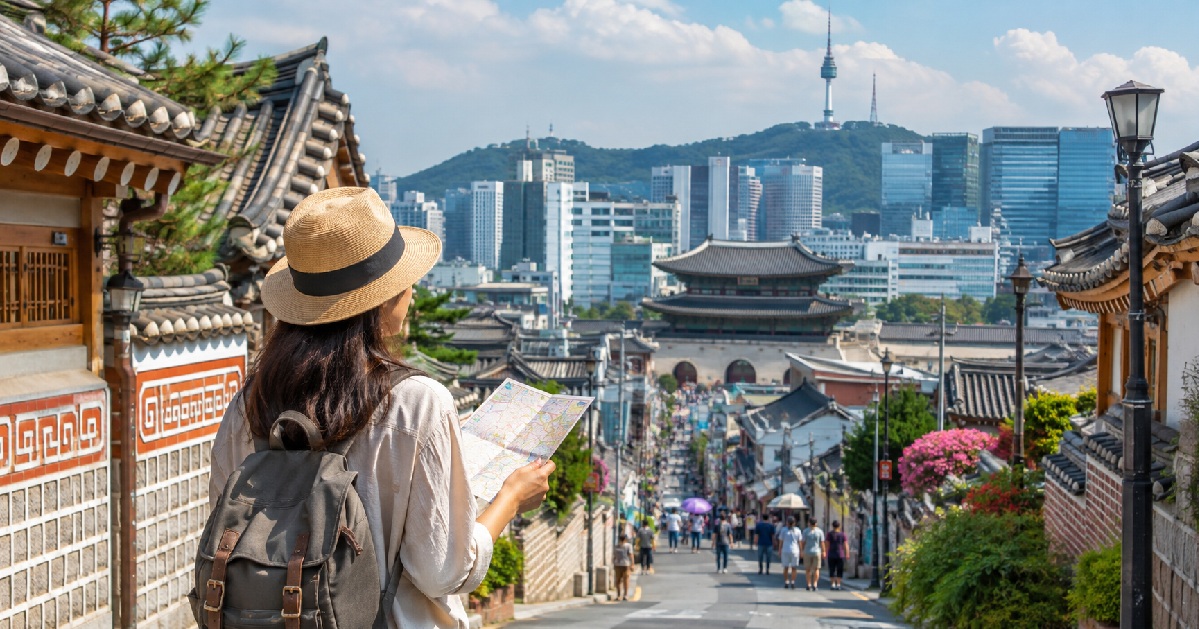
Planning your first trip to South Korea can feel exciting and a little overwhelming at the same time.
South Korea is modern, safe, convenient, and packed with things to experience—from Seoul’s busy neighborhoods and historic palaces to coastal cities, mountain trails, street food, cafés, and traditional markets.
A little preparation can make your trip much easier.
Here are 12 essential South Korea travel tips to know before you go.
Table of Contents
1. Get Connected as Soon as You Arrive
Having mobile internet access makes traveling in Korea much easier.
You will use your phone for navigation, translation, transportation information, restaurant searches, and messaging.
Travelers commonly use:
- eSIM
- prepaid SIM cards
- portable Wi-Fi devices
If your phone supports eSIM, it can be one of the easiest options because you can arrange your connection before arriving.
2. Use Korean-Friendly Navigation Apps
Google Maps can be useful in Korea, but it may not always provide the same level of navigation detail that travelers expect in other countries.
Two popular local navigation services are:
- Naver Map
- KakaoMap
Both can help with public transportation, walking routes, restaurants, cafés, and attractions.
Installing at least one of them before your trip is a good idea.

3. Buy a Transportation Card
Public transportation in South Korea is excellent.
In major cities, buses and subways are usually the easiest way to get around.
A rechargeable transportation card can be used on many buses and subway systems and can save you from buying individual tickets repeatedly.
Keep a small balance available and recharge it when necessary.
4. Seoul’s Subway System Is Easier Than It Looks
The Seoul subway map may look complicated at first, but it is surprisingly easy to use.
Stations are numbered, many signs include English, and transfer stations are clearly marked.
Before boarding, check:
- the line number or color
- the station name
- the direction of travel
- the final station shown on the platform
Once you use the subway a few times, navigating Seoul becomes much easier.
5. Keep Some Cash With You
Credit cards are widely accepted in South Korea, especially in cities.
However, carrying some Korean won is still useful.
Cash may come in handy for:
- traditional markets
- small shops
- street food
- transportation card recharging
- certain local businesses
You do not need to carry a large amount, but having some cash available is convenient.
6. Convenience Stores Are Extremely Useful
Convenience stores are everywhere in Korea.
They are more than places to buy snacks.
You can often find:
- bottled water
- simple meals
- coffee
- toiletries
- travel necessities
- late-night food
They can be especially useful when you arrive late or need something quickly.
7. Korean Food Is Much More Than Korean BBQ
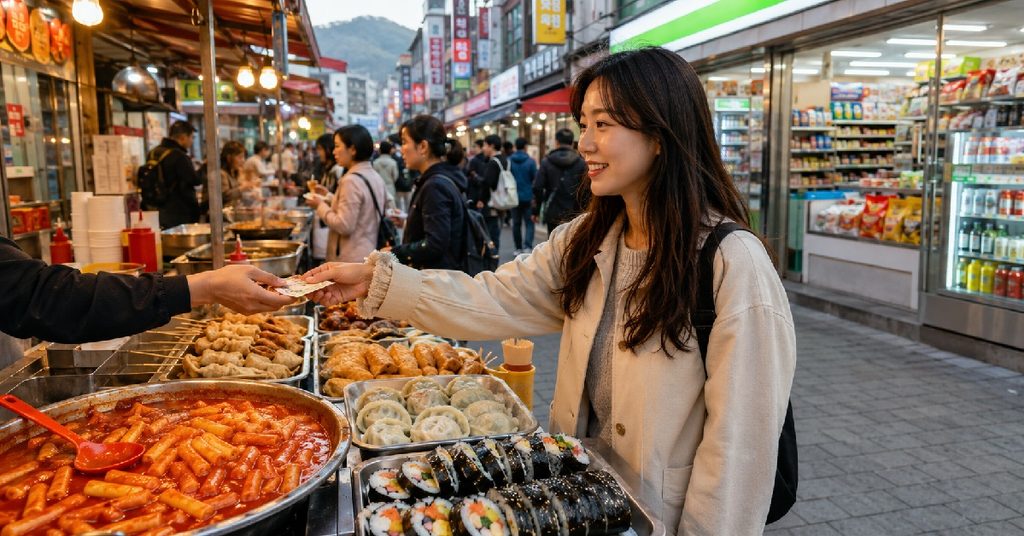
Korean barbecue is famous, but it is only a small part of Korean cuisine.
During your trip, consider trying dishes such as:
- bibimbap
- kimchi jjigae
- samgyeopsal
- tteokbokki
- gimbap
- mandu
- kalguksu
- fried chicken
Traditional markets are also excellent places to experience local food.
If you have dietary restrictions, preparing a translated explanation on your phone can make ordering easier.
8. Learn a Few Basic Korean Phrases
You can travel around major tourist areas without speaking Korean, but knowing a few simple expressions is helpful.
Useful phrases include:
Hello
안녕하세요
Annyeonghaseyo
Thank you
감사합니다
Gamsahamnida
Excuse me / Just a moment
잠시만요
Jamsimanyo
How much is it?
얼마예요?
Eolmayeyo?
Even a small effort to speak Korean is often appreciated.
9. Respect Local Etiquette
Korean society places importance on courtesy and respect.
You do not need to understand every cultural rule, but a few habits are useful.
For example:
- speak quietly on public transportation
- wait for passengers to exit before boarding
- use both hands when giving or receiving something in formal situations
- avoid blocking subway doors or escalators
- follow posted rules at temples and historic sites
Simply paying attention to what people around you are doing will help.
10. Korea Is Great for Independent Travel
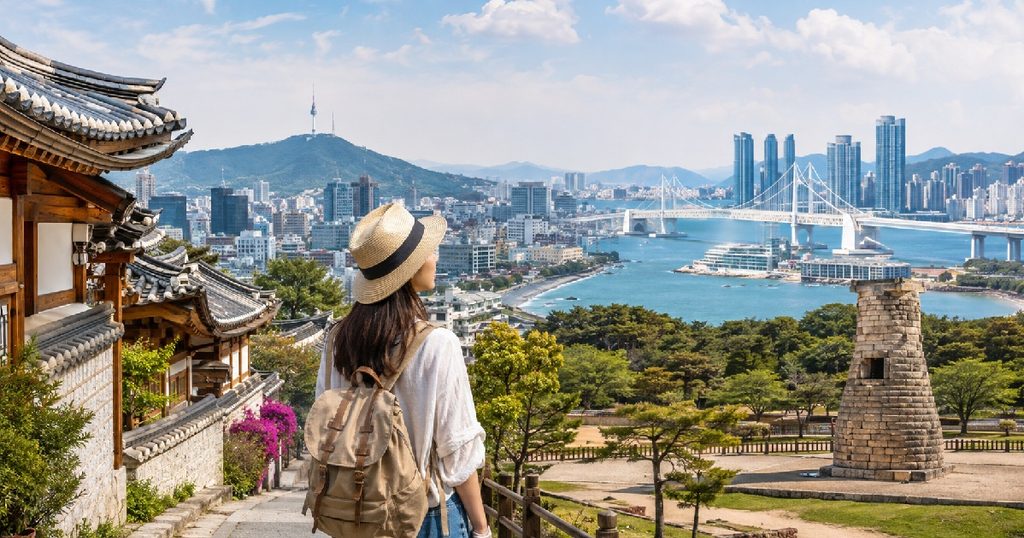
South Korea is a convenient destination for travelers who prefer exploring without organized tours.
Public transportation connects many destinations, and major cities have a wide range of accommodation options.
Popular destinations include:
- Seoul
- Busan
- Gyeongju
- Jeju Island
- Jeonju
- Sokcho
- Gangneung
You can combine several destinations depending on the length of your trip.
11. Do Not Try to See Everything
One common mistake is planning too many activities.
Seoul alone can easily fill several days.
Instead of rushing between attractions, leave time to explore neighborhoods, cafés, markets, parks, and local restaurants.
A slower itinerary often creates a much better travel experience.
12. Prepare a Simple Plan Before You Arrive
You do not need to schedule every hour of your trip.
However, prepare a few basics before departure:
- accommodation address
- airport transportation plan
- mobile internet option
- navigation app
- payment method
- transportation card plan
- list of places you want to visit
Once those essentials are ready, you can explore Korea much more comfortably.
Final Thoughts
South Korea combines modern infrastructure with deep history, distinctive food, beautiful landscapes, and energetic cities.
For first-time travelers, the country can seem unfamiliar at first, but transportation and everyday travel become much easier once you understand a few basics.
Start with the essentials, keep your itinerary flexible, and give yourself time to explore beyond the most famous attractions.
Korea Guide Lab will continue to publish practical guides covering transportation, destinations, food, accommodation, culture, and travel planning to help you make the most of your trip to South Korea.