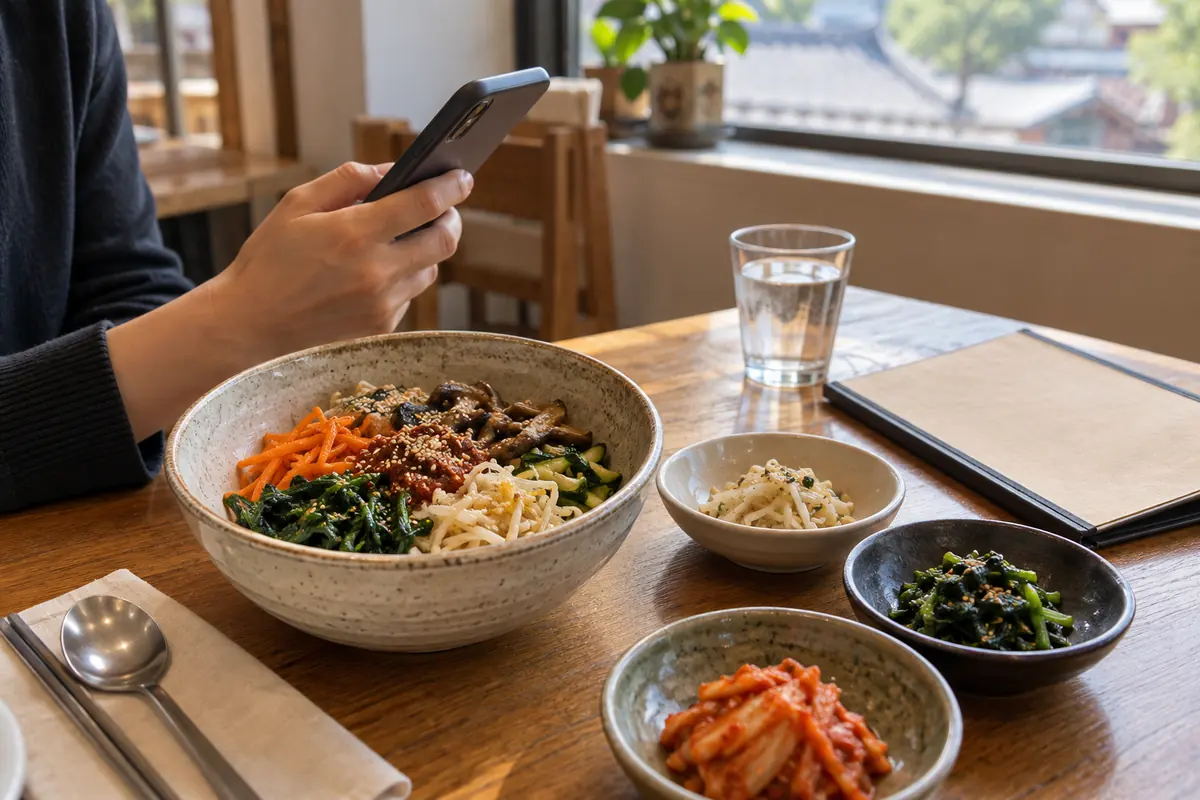
A bowl can look meat-free and still contain anchovy broth or a sauce you would not choose. Ask about the parts you cannot see: stock, seasoning and preparation. Vegetarian, vegan and halal are different requirements, so be specific about yours. A specialist restaurant is often a better starting point than trying to change an unsuitable dish after it reaches the table.
Last checked: September 2026. Menus, certifications and ingredients can change. This is an independent planning guide, not a claim that any pictured meal or named restaurant meets your dietary rules.
Vegetarian food in Korea: a five-minute vegan and halal decision path
- Strict halal: Use the Korea Tourism Organization (KTO) Muslim-friendly directory. Check the restaurant’s exact category and current certification with the restaurant. “Pork-free” and “Muslim-friendly” do not mean the whole kitchen is halal-certified.
- Vegan: Look for a dedicated vegan restaurant or a credible vegan-certified packaged product. Ask about fish sauce, anchovy broth, salted shrimp, egg, dairy and honey.
- Vegetarian: Confirm whether your chosen type of vegetarian diet allows egg or dairy. Ask about stock and seasonings even if the main dish has no visible meat.
- Severe allergy: Ask about ingredients and cross-contact separately. If staff cannot verify a safe preparation method, choose another meal.
Save your dietary requirements in Korean on your phone before you leave your hotel. A short, specific sentence works better than pointing to a photo and saying “no meat.” For general ordering and payment etiquette, see our Korean restaurant guide.
Why familiar Korean dishes still need an ingredient check
Bibimbap can be a good starting point, but ordinary versions commonly include beef and egg; ask about the sauce and broth too. Vegetable gimbap may still include egg, ham or imitation crab. Kimchi often uses fish sauce or salted seafood. Tofu stew may contain seafood stock or salted shrimp. Vegetable pancakes may use egg in the batter. KTO’s vegetarian travel guide documents these common surprises.
That does not mean you must avoid every Korean dish. It means a menu name is a clue, not a guarantee. Ask the kitchen to identify the actual ingredients in this serving. A restaurant may be unable to remove a seasoning that is already mixed into a batch; a polite “no” is useful information, not a failure of the conversation.
Copy-and-show Korean questions for the restaurant
Vegetarian, no fish or seafood:
저는 채식주의자입니다. 고기, 생선, 해산물, 멸치 육수와 젓갈을 먹지 않습니다. 이 음식에 들어가나요?
I am vegetarian. I do not eat meat, fish, seafood, anchovy stock or salted seafood. Does this dish contain any of them?
Vegan:
저는 비건입니다. 고기, 생선, 해산물, 달걀, 우유 등 유제품, 꿀, 멸치 육수와 젓갈을 먹지 않습니다. 이 음식에 들어가나요?
I am vegan. I do not eat meat, fish, seafood, eggs, dairy, honey, anchovy stock or salted seafood. Does this dish contain any of them?
Strict halal:
할랄 인증을 받은 음식인가요? 인증 기관과 현재 인증 상태를 확인할 수 있을까요? 돼지고기, 돼지기름이나 술이 들어가나요?
Is this food halal-certified? May I check the certifying body and current status? Does it contain pork, lard or alcohol?
Shared equipment or allergy:
같은 조리도구로 다른 음식을 조리하나요? 알레르기가 있어서 정확히 확인해야 합니다.
Is the same equipment used for other food? I have an allergy and need an exact check. For a serious allergy, show the precise allergen in Korean and ask a staff member to confirm with the kitchen; this generic sentence alone is not sufficient.
What “Muslim-friendly” actually means on KTO listings
KTO uses four different categories. Halal Certified means certification by an accredited agency. Self-certified means the Muslim restaurant owner certifies that all food is halal. Muslim Friendly means some halal dishes are available, and alcohol may be sold. Pork free means no pork is used, but it does not promise a halal menu, and alcohol may be sold. KTO also cautions that some hotel restaurants in its Muslim-friendly category may serve pork. Read the category and symbols for the specific restaurant, then confirm the current menu before traveling across town.
If your practice requires a particular certifier, dedicated utensils or no alcohol on the premises, explain that requirement directly. A map pin labeled “halal” by another user is not documentary proof. For help locating options, use KTO’s Muslim-friendly restaurant map as a starting point, not a substitute for checking the venue.
A reliable plan in Seoul, Busan and smaller cities
Before the day trip: Pick one suitable lunch place and one backup near your route. Save the Korean name, address, opening hours and latest menu. Contact the venue if strict certification or cross-contact matters. In a large city you may find specialist restaurants; in smaller towns, allow more time and do not assume a late-night fallback exists.
At a conventional restaurant: Choose a simple dish with ingredients staff can identify and modify, rather than a stew with premixed stock. Show your Korean card before paying. If staff say they cannot make it safely, thank them and use your backup. If you need a delivery option, read our separate food delivery guide for visitors without a Korean number, then verify that the restaurant can handle your dietary request.
At a convenience store or supermarket: Check the current ingredients and certification mark on the exact package, including sauce packets. A plant-looking photo on the front is not enough. See our convenience-store guide for payment and shopping basics. If you need verified vegan food, KTO recommends looking for a credible vegan certification logo on packaged products.
Is Korean temple food vegan?
Temple food is a valuable vegetarian option, often centered on grains, vegetables, mushrooms and seasonal herbs. But do not treat “temple food” as an unconditional vegan or halal label. KTO describes Korean temple cuisine as excluding animal ingredients except dairy in some contexts; a commercial temple-food restaurant can also adapt recipes for the public. Confirm the particular menu and preparation. KTO’s temple-food overview is a useful introduction.
Common questions
Can I order bibimbap without meat and egg?
Often you can ask, but check the sauce, stock, side dishes and whether the kitchen can accommodate the change. The answer depends on the venue.
Is kimchi vegan?
Not by default. Many recipes contain fish sauce or salted seafood. Choose a specifically labeled vegan product or ask about the recipe.
Does pork-free mean halal?
No. KTO lists “pork free” separately from “halal certified.” Check the category and your own requirements before ordering.
Bottom line: For vegetarian food in Korea, your safest plan is not a universal list of “safe Korean foods.” It is a repeatable check: identify your exact rule, find a credible venue or label, ask about hidden ingredients, and keep a backup meal ready.